Kitchen
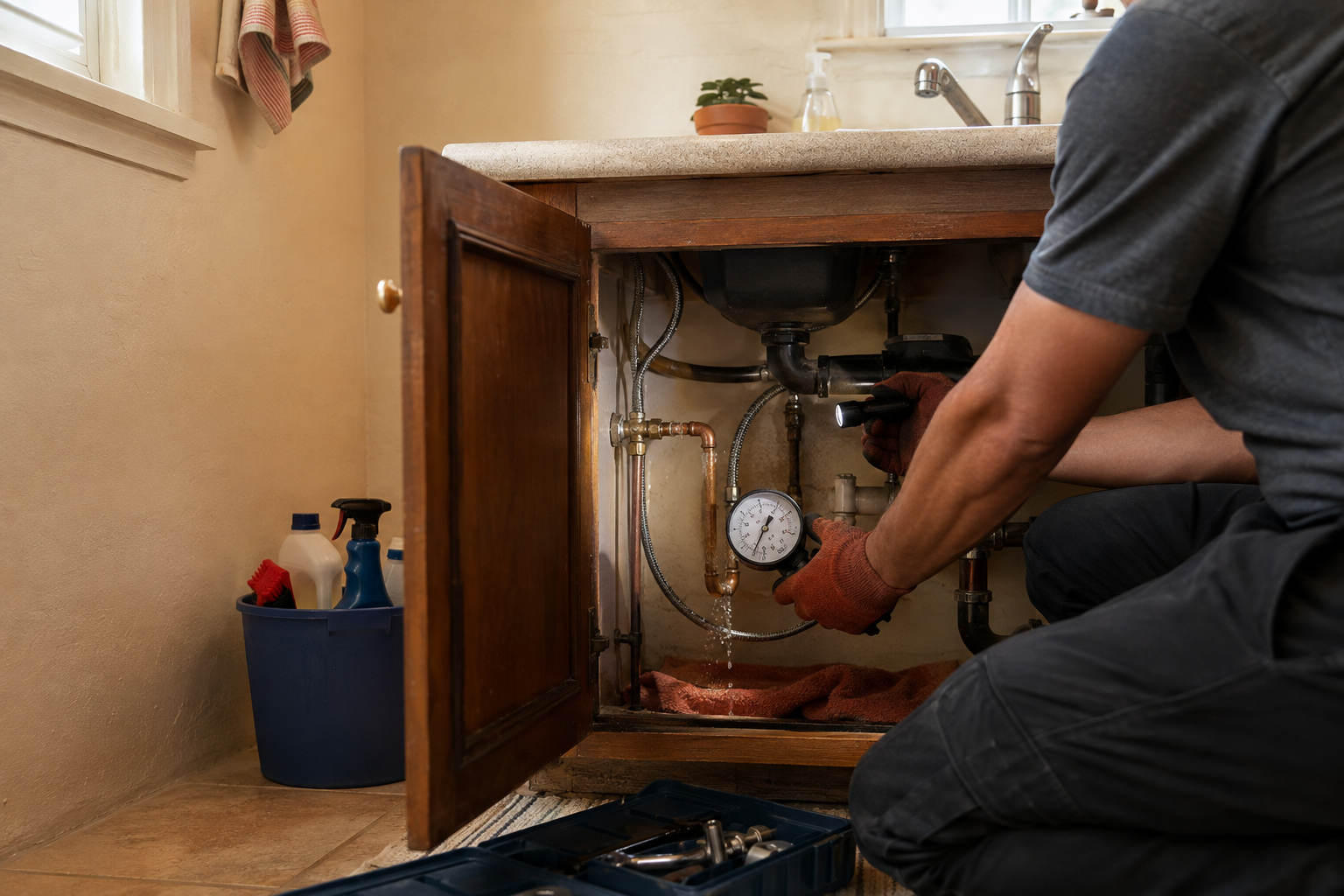
Mention the sink, disposal area, dishwasher connection, refrigerator line, or cabinet floor. If water appears only when one appliance runs, say so.
Santa Ana plumbing call guide
You do not need the exact repair name before you call. Choose the symptom that looks closest, gather a few useful details, and call for local plumbing help.
Use 911 for immediate danger. Service availability, scope, and next steps are confirmed by phone.
Follow the waterline
Choose the problem
Start with what changed. The provider can name the repair after the actual condition is evaluated.
Note where it first appears, what makes it start, and whether a known safe shutoff changes it.
Sort leak clues →Count the affected fixtures and notice whether using one creates a reaction in another.
Compare drain signals →Separate no heat, short runs, temperature swings, noise, and visible moisture around the unit.
Prepare heater details →Describe the area, the result you want, and any access or permit information you already have.
Plan the conversation ↓Control the water
A room name is only the start. Add the fixture, timing, and interaction with nearby plumbing.
Mention the sink, disposal area, dishwasher connection, refrigerator line, or cabinet floor. If water appears only when one appliance runs, say so.
Name the fixture and whether another fixture changes at the same time. That interaction is more useful than simply saying the bathroom is clogged.
Describe visible moisture, the equipment type, and what happens when hot water is used. Keep clear of fuel controls and electrical panels.
List every affected fixture and the order in which the signs appeared. Multiple rooms can change the questions a provider asks first.
Repair route
A clear handoff helps, but it does not replace your own check of the provider and the written work terms.
Say what you see, hear, or smell and where it happens. Plain language is enough.
The call may connect you with an independent provider. Actual availability is confirmed then.
Ask who will perform the work, what the proposed scope includes, and which qualifications apply.
Prepare for the call
You do not need to investigate hidden piping or put yourself at risk. Gather only what is easy and safe to observe.
Set the purpose of the call
Starting with the type of decision you need helps the provider ask better questions and helps you keep the conversation on track.
Lead with what is happening right now. Name the room, the fixture or surface involved, and whether using water makes the condition change. Say whether a known safe shutoff helped, but do not spend the first minute guessing which hidden part failed.
Ask what can be confirmed on the phone and what requires an on-site evaluation. If a temporary step is discussed, ask whether it only limits the immediate problem or is intended as the repair. Those are different decisions and may have different charges.
Begin with the result you want, then describe what is already there. Useful details can include the fixture type, approximate location, access to walls or cabinets, nearby electrical or gas equipment, and whether other remodeling work is planned.
Ask what information is needed before a written scope can be prepared. Product selection, code requirements, permit handling, finish repairs, and disposal can sit outside a basic plumbing line item, so confirm which parts belong to the proposed work.
Property coordination
A clear answer prevents the service conversation from stalling after the plumbing details are already understood.
Tell the property owner or manager about the condition according to your property arrangements. On the call, explain whether you can authorize a visit, whether the provider needs to coordinate with someone else, and whether a shutoff or utility room is shared.
Have the correct unit number and building contact ready. If water is affecting another unit or a common area, include that fact without assuming where the source began. The building contact may have records or access that change the next step.
Identify the person who can approve entry, diagnosis, and additional work. Mention tenant or operating-hour limits, locked equipment areas, parking instructions, and any point of contact who must be present.
After the conversation, keep the provider's business name, callback number, license information, proposed arrival window, and any stated charge together. A short written record makes it easier to compare what was discussed with the proposal or invoice later.
Call panel
Start with the affected room, the visible symptom, and whether the situation is changing.
This is a free service that helps property owners connect with independent local service providers. Availability and qualifications are confirmed during the call.
Questions
Straight answers about the website's role and the decisions that remain yours.
No. This is a lead-generation and referral website. The call may connect you with an independent provider. Confirm that provider's identity, qualifications, availability, scope, and terms during the call.
No. Availability depends on the receiving provider and is confirmed on the phone. Use 911 for immediate danger.
The website does not set prices. Ask what evaluation or service charges apply, what is included in the proposed work, and when you will receive written terms.
Ask for the contracting business name and license number. Use the official CSLB license lookup to check the current status and classification before authorizing work.
The intended market is Santa Ana. Availability for a particular street address, including an address in 92703, is confirmed during the call.